Southern Thai (Pak Tai): the fast, warm Thai of the South
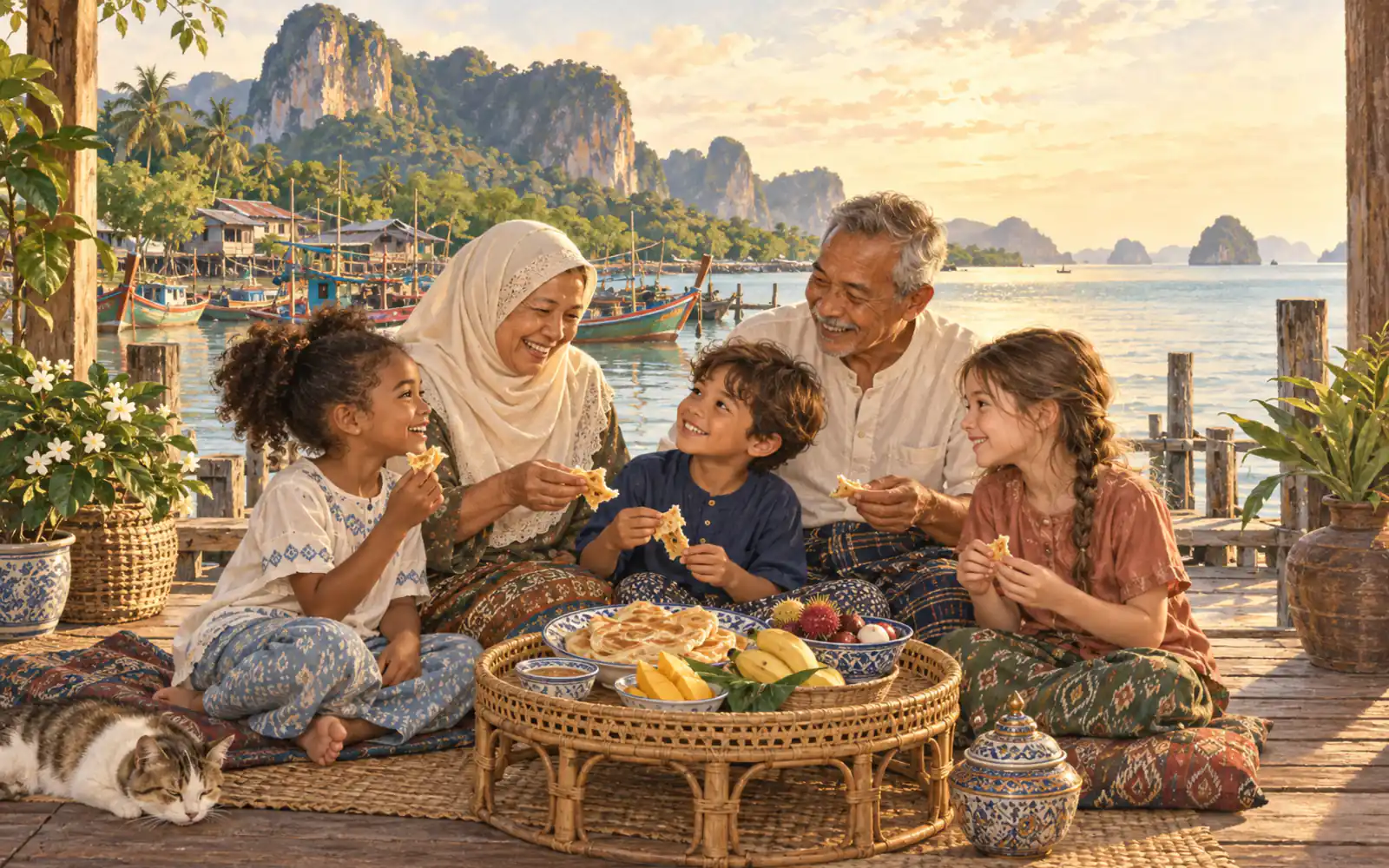
Southern relatives have a reputation: warm, generous, and talking at a speed that leaves Bangkok cousins two sentences behind. If your family is from the South and your Thai is the slow, careful kind, that gap is real, it has a reason, and it’s nothing to be embarrassed about.
What is Pak Tai?
Pak Tai simply means “the South”, and it’s what many people call the Southern Thai language. It’s the home language of the South’s Thai communities, spoken by about 4.5 million people in the figures Wikipedia compiles from the Thai government’s 2011 report to the UN (its article on the language puts it at roughly five million). Most speakers are fluent in Central Thai as well.
Where is Southern Thai spoken?
In one continuous area from the south of Prachuap Khiri Khan down to the Malaysian border: Chumphon, Ranong, Surat Thani, Nakhon Si Thammarat, Phatthalung, Trang, Krabi, Phang Nga, Phuket, Songkhla and Satun, plus small communities in Malaysia’s northern states. Wikipedia notes that in Satun and Songkhla it’s also the main language of many Malay-descended families.
The South: where Southern Thai is the main local language
- Southern Thai (Pak Tai)
Approximate. Each province shows only its main local language; real language areas cross province lines, cities mix everyone, and nearly everyone also speaks Central Thai.
Further south, in Pattani, Yala and Narathiwat, the main community language is Pattani Malay, a Malay language rather than a Thai one; many people there speak Southern Thai and Central Thai too. Our guide to the languages of Thailand explains the difference.
Does Southern Thai have dialects?
Lots. Wikipedia lists varieties named after where they’re spoken, including the Nakhon Si Thammarat dialect (often treated as the standard), Songkhla, Chumphon, Samui, the Tak Bai dialect near the Malaysian border, and the Phuket dialect spoken in Peranakan families in Phuket, Krabi, Trang and Phang Nga. They all remain mutually intelligible, and the language gets more distinctive the closer you get to Malaysia.
How is it different from Central Thai?
Of all the regional languages, Southern Thai is the closest to Central Thai in words and grammar. So why is it so hard to follow? Wikipedia gives three reasons:
- Speed. Everyday Thai words are often said in a reduced, rapid form.
- Tones. The tones are distributed differently, with up to seven in some provinces.
- R stays R. Southern speakers almost always keep the rolled r sound, where Northern Thai, Isan and casual Central Thai often turn it into an l.
People also slide between registers: from Central Thai said with a Southern tune and accent, all the way to fast home-style Pak Tai with Malay loanwords. Your relatives probably already do this for you without thinking about it.
What helps on a visit to Southern family?
Asking people to slow down is completely normal in the South, and nobody minds. These Central Thai lines from the Reply Thai app are the ones you’ll use most:
พูดช้าๆ หน่อยได้ไหม
phuut chaa chaa noi dai mai
พูดช้าๆ หน่อยได้ไหมครับ
phuut chaa chaa noi dai mai khrap
พูดช้าๆ หน่อยได้ไหมคะ
phuut chaa chaa noi dai mai kha
Could you speak a bit slower?
Literally: “speak slow-slow a-little can (question)”
หน่อย turns it from an instruction into a gentle ask. Works with any elder.
Draft: waiting for a native speaker’s review.
พูดอีกทีได้ไหม
phuut iik thii dai mai
พูดอีกทีได้ไหมครับ
phuut iik thii dai mai khrap
พูดอีกทีได้ไหมคะ
phuut iik thii dai mai kha
Could you say that again?
Literally: “speak again time can (question)”
Better than pretending. Yai would much rather repeat it than talk past you.
Draft: waiting for a native speaker’s review.
สำเนียงอาจจะแปลกๆ
sam-niang aat ja plaek plaek
สำเนียงอาจจะแปลกๆครับ
sam-niang aat ja plaek plaek khrap
สำเนียงอาจจะแปลกๆค่ะ
sam-niang aat ja plaek plaek kha
My accent might be a bit funny.
Literally: “accent maybe strange-strange”
Say it with a laugh. Doubling แปลก softens it to “a bit odd”.
Draft: waiting for a native speaker’s review.
And when you do catch a sentence at full Southern speed, enjoy it. That’s a real listening skill, and it comes from being around family.
Then there’s the food, which does a lot of the talking. Trang alone has earned the nickname “the land of food” for dishes like mu yang, its crisp-skinned roast pork, and its dim sum breakfasts in old kopi tiam coffee shops. The map of Thailand’s 77 provinces lists what each Southern province is known for.
Where can you learn Southern Thai words?
We’d love to add a small set of everyday Pak Tai words here, checked by native Southern speakers, the way our page on Isan words for visiting family does for the Northeast. Until then, the best teacher is your family. For the North, see Northern Thai (Kham Mueang).
Would you use a Southern Thai app?
Pick up to 3. We read every vote. No promises, but this shapes what we build.
Voting opens soon. Nothing is collected yet.
Thank you, your vote is in. See what people want next.
Southern Thai varies from province to province and family to family. If yours says it differently, your family is right.
Thai words on this page are a draft until a native speaker has reviewed them.
Questions people ask
Do people in the south of Thailand speak Thai?
Yes. Central Thai is used in school and official life everywhere, and most Southern Thai speakers are fluent in it. At home many speak Southern Thai (Pak Tai), and in Pattani, Yala and Narathiwat the main community language is Pattani Malay.
Why does Southern Thai sound so fast?
Southern Thai often says Thai words in a shortened, rapid form, and its tones are distributed differently, with up to seven tones in some provinces. Wikipedia notes this can make it hard for speakers of other varieties to follow.
Is Southern Thai a different language from Thai?
It’s the regional language closest to Central Thai in vocabulary and grammar, but different enough that understanding each other can be tricky. Linguists usually treat it as its own Tai language; the Thai government has historically called it a dialect.
Where is Southern Thai spoken?
From the south of Prachuap Khiri Khan down to the Malaysian border, in provinces such as Chumphon, Surat Thani, Nakhon Si Thammarat, Phatthalung, Trang, Krabi, Phuket and Songkhla, and in small communities across the border in Malaysia.
Sources
All links read on .
- Wikipedia: Southern Thai language (distribution, dialects, differences from Central Thai, tones)
- Wikipedia: Languages of Thailand (4.5 million Pak Tai speakers, in its table compiled from the government’s 2011 report and the Ethnolinguistic Maps; Peranakan families)
- Royal Thai Government, report to the UN Committee on the Elimination of Racial Discrimination, CERD/C/THA/1-3 (2011): Southern Thai among 62 ethnolinguistic groups; Malay-descended Thais in five southern provinces
- Wikipedia: Patani Malays (Pattani Malay in Pattani, Yala, Narathiwat and parts of Songkhla)
- Wikipedia: Trang province (local food, mu yang)
How we write and check our guidesReport a mistake
Letters from the in-between
One email when there’s something worth reading: new guides, stories from other luk khrueng, and a phrase for your next family call. No spam, ever.