Thai food by region: Central, Northern, Isan, Southern
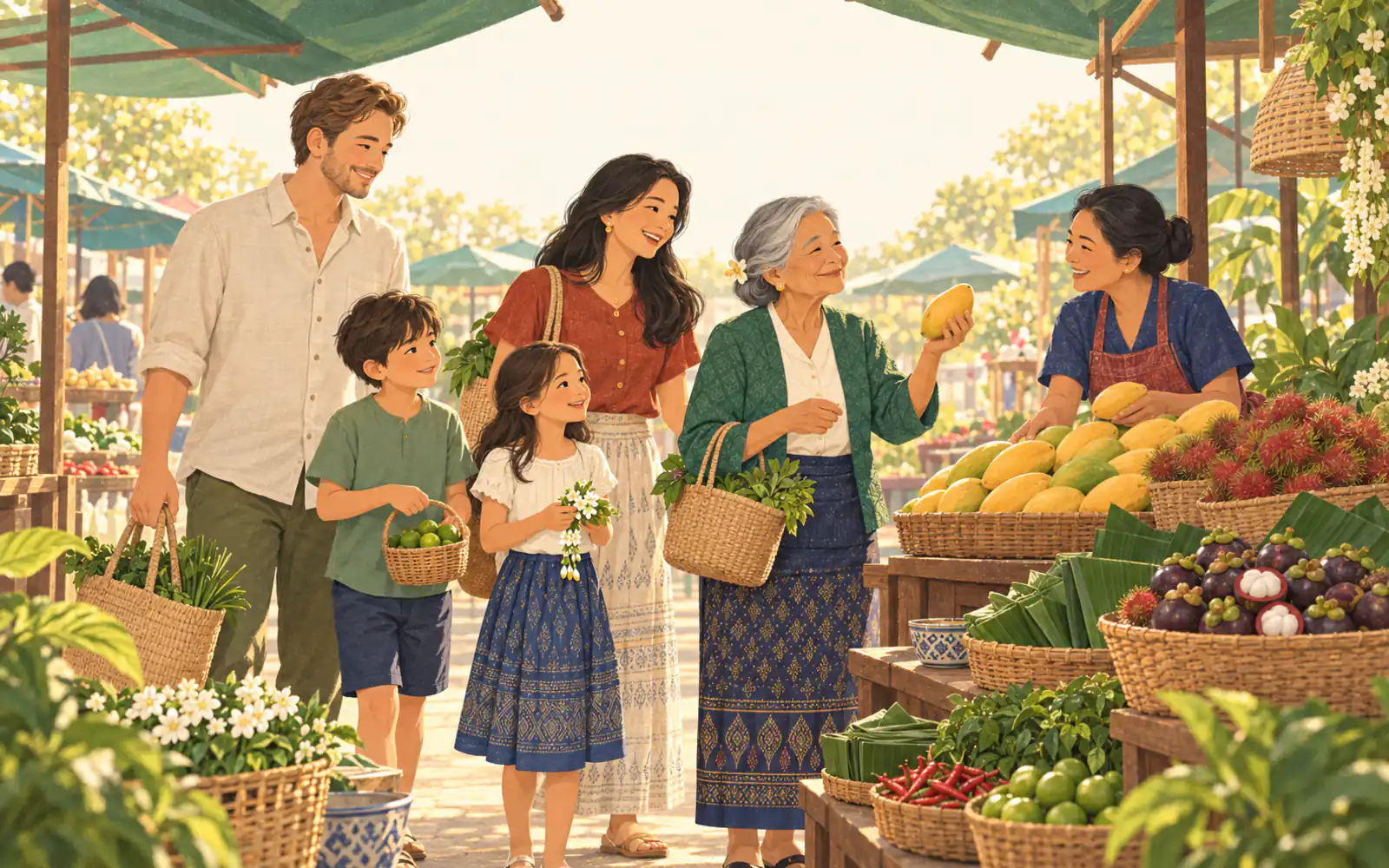
Ask a room of people with Thai family what “Thai food” is and you’ll get different answers. One grew up on sticky rice eaten with the fingers and a som tam that could strip paint. Another remembers coconut curries and a neat mound of jasmine rice. A third swears nothing is real Thai food unless it is yellow with turmeric. They are all right. They just have mums from different regions.
This guide walks through the four big regional styles, so you can work out where the food you grew up with comes from, and what to look for when you go back.
Is Thai food one cuisine or several?
Several. This guide uses four broad food regions: Central (including Bangkok), the North, the Northeast (Isan) and the South. Wikipedia’s Thai cuisine article counts five, with Bangkok as a region of its own. The Tourism Authority of Thailand (TAT) used a regional map too: its May 2023 “Thailand’s Hidden Dishes” campaign picked one lesser-known dish from each of five regions (Central, Eastern, Northern, Northeastern and Southern).
The fastest way to tell the regions apart is the rice. The North and Isan eat sticky rice, steamed and squeezed into small balls by hand. Central and southern tables usually have jasmine rice, the fluffy, non-sticky kind. If your family reaches for a little basket of sticky rice at every meal, that already tells you a lot.
What is central Thai food?
If you grew up with Thai food abroad, a lot of it may feel familiar. Wikipedia describes central Thai food as the food of the flat, wet rice-growing plains, where coconut milk is a major ingredient and dishes are usually eaten with jasmine rice. Kaeng som, a hot and sour soup or curry eaten with rice, is one everyday example.
Central and Bangkok food also carries a lot of Chinese heritage. A February 2026 TAT feature traces it to Hokkien, Teochew and Cantonese immigrants who arrived generations ago, and credits Chinese cooks with stir-frying, noodle making, soy fermentation and deep-frying. Before that, it says, Thai cooking leaned on grilling, boiling and fermenting. Pad see ew, the noodle soups called guay tiew and crispy pork all come from that exchange, finished the Thai way with chilli vinegar, lime and fish sauce.
If your family is Thai-Chinese, a lot of what feels like home cooking (the rice porridge when you’re ill, the steamed fish at a family dinner) may come from this side. Our Chinese New Year guide for Thai-Chinese families has more on that mix.
What food is northern Thailand known for?
Northern food, sometimes called Lanna food after the old northern kingdom, goes with sticky rice, chilli dips and lots of herbs. A March 2024 MICHELIN Guide list made with TAT is a good map of the classics:
- Khao soi: rice noodles in a curry balanced with coconut milk, with pickled cabbage, shallots and lime on the side. MICHELIN calls it a Chin Haw dish; Wikipedia explains the Chin Haw were Chinese Muslim traders, which is why it is still usually made with chicken or beef rather than pork.
- Nam prik ong and nam prik num: the two famous chilli dips. Ong is minced pork and tomato; num is made from young chillies. MICHELIN pairs them with sai ua sausage, and suggests adding pork rind.
- Sai ua: a fat, coiled pork sausage packed with dried chilli, galangal, turmeric, makrut lime leaf and shallot.
- Kaeng hang le: a rich pork curry, sour-salty rather than fiery, which MICHELIN links to neighbouring Myanmar.
- Northern larb: not the same as the Isan one. It uses local herbs and spices such as galangal and prickly ash seeds; MICHELIN calls prickly ash “the king of Northern Thai spice”.
Wikipedia notes that northern food shares dishes with Shan State in Myanmar, northern Laos and Yunnan in China, which helps explain why it tastes so different from the Bangkok version. If your family is from Chiang Mai, Lampang or Nan, the chilli dip on the table at every meal may be the dish you miss most.
What is Isan food?
Isan is the Northeast of Thailand. Wikipedia notes that most people there are ethnically Lao, and that Isan food has most in common with the food of Laos. Many people speak Isan, a variety of Lao, as their first language; our Isan words for visiting family are a good start.
The classic Isan meal, as MICHELIN puts it, is larb, grilled chicken, papaya salad and sticky rice:
- Som tam: pounded green papaya salad (Isan people often call it tam buk hoong). MICHELIN’s list of spicy dishes says the spicier it is, the better it tastes. Every family has its own balance, and every family is sure theirs is correct.
- Larb: a salad of minced meat with lime, chilli and lots of herbs, eaten with sticky rice. MICHELIN notes it was once a dish for guests and festivals.
- Grilled chicken (often written gai yang or kai yang), eaten with sticky rice.
- Pla ra: fish fermented with salt and rice. MICHELIN calls Isan’s preservation technique a highlight of the cuisine. It is strong, and it is the flavour that makes an Isan som tam taste like home to the people who grew up with it.
Isan food is loud: sour, salty, hot and herby. When TAT picked a hidden dish from the region in May 2023, it chose au pla, a spicy and salty freshwater-fish curry from Khon Kaen, noting that Isan has many rivers and that many local dishes use freshwater fish.
What makes southern Thai food different?
Turmeric, heat and the sea. In a December 2021 MICHELIN feature, chefs who cook southern food describe a “distinct spiciness” and flavours that are “deeper, more intense than elsewhere”. Turmeric is what sets southern curries apart, and shrimp paste and fish sauces do much of the seasoning.
Dishes to know:
- Kua kling: a classic southern dry curry of minced pork stir-fried in a chilli-heavy paste, usually with fresh vegetables to cool things down (from MICHELIN’s 2019 list of spicy dishes).
- Kaeng tai pla: a pungent curry built on tai pla, fish innards fermented for up to a month. A southern chef quoted by MICHELIN in 2018 calls it “the queen of curries”.
- Kaeng som, also called kaeng lueang: a fiercely spicy and sour fish curry soup infused with turmeric.
- Khanom jeen: fresh rice noodles with curries ladled over and a basket of vegetables on the side. MICHELIN’s southern chefs describe unlimited vegetables, a tour of the area’s produce.
The South also has deep Chinese and Muslim roots. MICHELIN’s chefs credit Hokkien Chinese settlers with the braised pork dish mu hong, and the region’s large Muslim population with curry eaten with roti.
What did your family actually cook?
Here’s the part no guide can do for you. Regional labels are a starting point, not a rule. Families move, marry across regions and borrow. A mum from Isan may make a central green curry for guests; a Bangkok grandmother with Teochew roots may cook dishes no Thai menu abroad has heard of.
So ask. Next time you call, start with the family classic:
กินข้าวหรือยัง
gin khaao rue yang
Have you eaten?
Literally: “eat rice or yet”
In Thai families, this is how love sounds.
Draft: waiting for a native speaker’s review.
Then ask the questions that unlock the food: Where did Yai grow up? Which rice did they eat? What did she cook on ordinary days, not just festivals? Write the answers down, or record them. The details (how long she pounds the papaya, which chilli she trusts) are the recipe that isn’t written anywhere else. If you’re cooking it abroad, our guide to Thai ingredients abroad covers the shopping list and the honest swaps, and cook the Thai food you grew up with walks through six family favourites. Our guide to Thai family words helps if you’re not sure which aunt to ask.
And when she cooks for you, there is one line that always lands:
ไม่มีใครทำอร่อยเท่ายาย
mai mii khrai tham a-roi thao yaai
Nobody cooks like you, Yai.
Literally: “not have who make delicious equal grandma”
The big compliment. Works for mum too: ไม่มีใครทำอร่อยเท่าแม่.
Draft: waiting for a native speaker’s review.
How do you order regional food without getting burned?
If you go back and want to try the region your family is from, the honest advice is: southern and Isan food can be properly hot, even for people who grew up near it. Asking for less heat is normal, not a failure:
เผ็ดน้อย
phet noi
เผ็ดน้อยครับ
phet noi khrap
เผ็ดน้อยค่ะ
phet noi kha
Not too spicy, please.
Literally: “spicy little”
Stall heat is real heat. เผ็ดน้อย asks for less; ไม่เผ็ด means no chilli at all.
Draft: waiting for a native speaker’s review.
Food is also how a lot of Thai families say they care, so expect “have you eaten?” at every door. Our guide to what “have you eaten yet?” really means explains how to answer.
The Family meals moment in Reply Thai practises the lines for the table: being fed, praising the cook and saying “I’m full” kindly.
Thai words on this page are a draft until a native speaker has reviewed them.
Questions people ask
What are the regional cuisines of Thailand?
This guide uses four broad food regions: Central (including Bangkok), Northern, Northeastern (Isan) and Southern. Wikipedia’s Thai cuisine article counts Bangkok separately and lists five. Each region has its own rice habits and signature dishes.
What food is northern Thailand known for?
Khao soi, a rice-noodle curry soup with Chin Haw (Chinese Muslim) roots; chilli dips such as nam prik ong (pork and tomato) and nam prik num (young chilli); sai ua herb sausage; kaeng hang le, a pork curry linked to Myanmar; and a northern larb seasoned with prickly ash. Northern Thais traditionally eat sticky rice.
What is Isan food?
The food of Northeast Thailand, where most people are ethnically Lao and the cuisine has most in common with Laos. MICHELIN describes its staple meal as larb (minced meat salad), grilled chicken and som tam (green papaya salad), with sticky rice. Fermented fish, pla ra, is a defining flavour.
What makes southern Thai food different?
Turmeric, which sets southern curries apart, plus shrimp paste, fish sauce and a reputation for heat. MICHELIN chefs describe the flavours as deeper and more intense. Chinese and Muslim communities left their mark too: mu hong pork stew from Hokkien settlers, curry with roti from the South’s Muslim population.
Is sticky rice eaten everywhere in Thailand?
No. Sticky (glutinous) rice is the everyday rice of the North and Isan. Central and southern meals are usually eaten with non-sticky jasmine rice.
Sources
All links read on .
- MICHELIN Guide Thailand: 11 must-try northern Thai dishes in Chiang Mai (with the Tourism Authority of Thailand, 25 March 2024)
- MICHELIN Guide Thailand: What is larb? The unsung hero of Thailand’s Isan cuisine (13 February 2023)
- MICHELIN Guide Thailand: The MICHELIN Guide expands into the Northeast region, Isan (26 April 2022)
- MICHELIN Guide Thailand: 9 must-try southern Thai dishes recommended by MICHELIN restaurant chefs (18 December 2021)
- MICHELIN Guide: On the culinary trail, taste of history at Takua Pa, Phang Nga (28 November 2018)
- MICHELIN Guide Thailand: The spicier the better, 6 spicy Thai dishes you must try (28 June 2019)
- TAT Newsroom: Silk Road on a Thai plate, Chinese heritage in Thai food (16 February 2026)
- TAT Newsroom: TAT promotes ‘Thailand’s Hidden Dishes’ to boost gastronomy tourism (May 2023)
- Wikipedia: Thai cuisine, regional cuisines (background, read 14 October 2026)
- Wikipedia: Isan, population, language and cuisine (background, read 14 October 2026)
- Wikipedia: Khao soi, Chin Haw origins (background, read 14 October 2026)
How we write and check our guidesReport a mistake
Letters from the in-between
One email when there’s something worth reading: new guides, stories from other luk khrueng, and a phrase for your next family call. No spam, ever.