What to bring your Thai family: gifts and khong fak
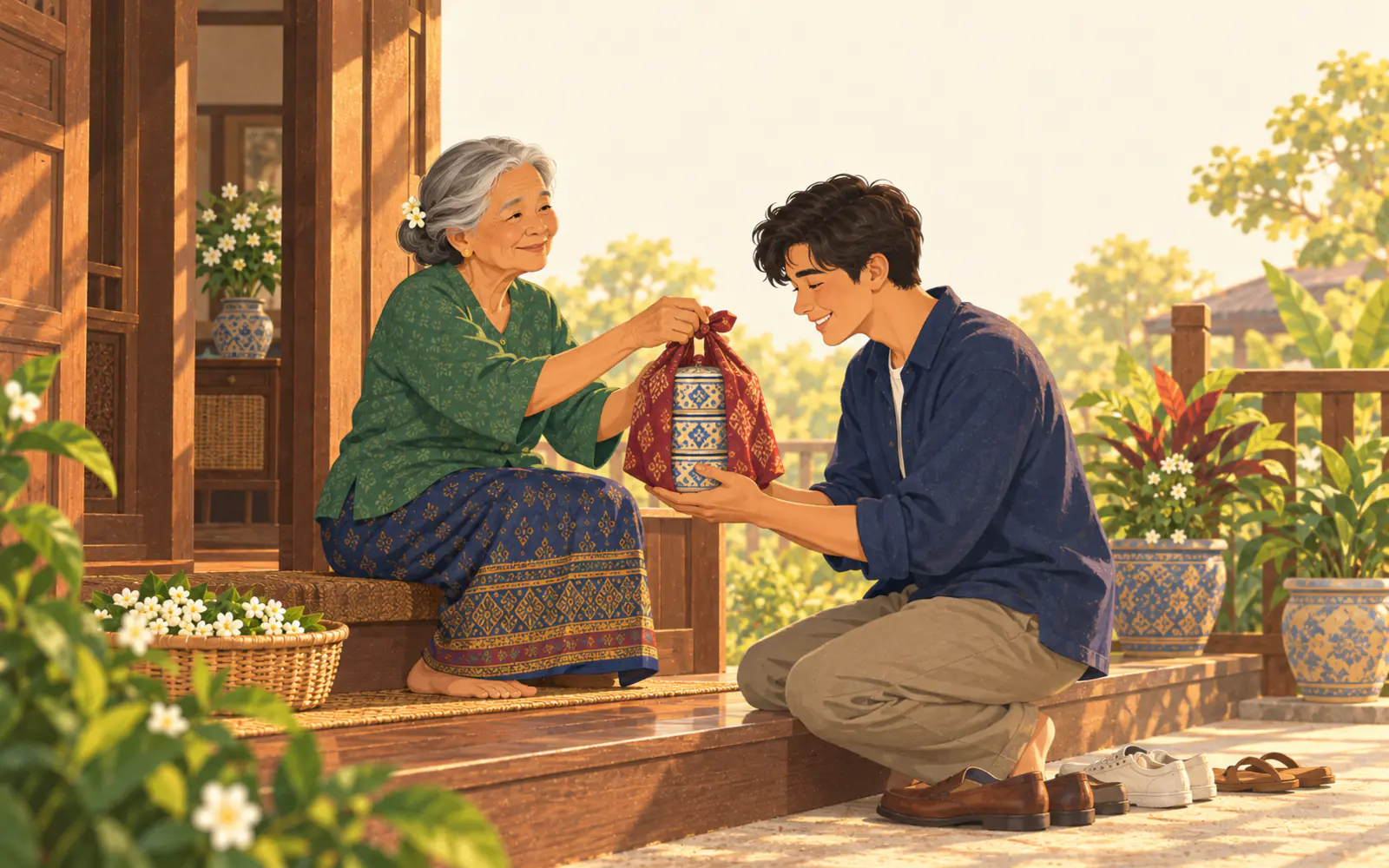
You’re packing for Thailand and half the suitcase is already spoken for. Or you’re about to meet your partner’s parents and wondering whether a box of chocolates is enough. Thai families are generous, and a gift is mostly a way of saying “I thought of you”. Here’s what usually lands well, how to hand it over, and what to leave at home.
What is khong fak?
Khong fak is the Thai word for a gift, present or souvenir, the NECTEC Lexitron dictionary says, and in daily life it’s the thing you bring back for someone from a trip. Coming home from abroad, it’s the bag of snacks, sweets and small things that gets shared out among parents, aunties, cousins and neighbours.
It doesn’t need to be expensive. The Cultural Atlas describes Thai gifts as often “small token gestures, such as sweets, trinkets or souvenirs”, and Commisceo says gifts are usually modest and presented with care.
What should I bring my Thai family from abroad?
First, a gift isn’t required: the Cultural Atlas notes it isn’t necessary to bring one when visiting a home, though it will be warmly received. Food is the safe, loved answer. The Cultural Atlas lists fruit, flowers, liquor or cakes as fitting gifts for the host, and The Thaiger suggests chocolates, fruit or flowers for smaller gifts. Things that are hard to get in Thailand, from your local bakery, chocolate shop or supermarket, tend to go down well, and packaged sweets travel better than anything fresh.
A few things that help:
- Bring enough to share. A big household may mean many hands in the bag.
- Keep it modest. Both Commisceo and The Thaiger warn that very expensive gifts can make people uncomfortable, so a thoughtful small gift beats a showy one.
- Ask someone at home. A parent or cousin will know who has a sweet tooth, who’s diabetic and who would love a scarf.
For the rest of the trip, from airport pickups to staying at a relative’s house, see our guide to visiting family in Thailand.
What do you give Thai elders?
Elders get the most care. The Thailand Foundation says it’s common for elders and important people to receive baskets of flowers or gifts from those who respect them, with fruit, food items and bottled bird’s nest soup as popular basket contents, along with a card wishing them good health and a long life.
So a gift for Yai or your partner’s grandmother might be a nice box of something from home and a few words of good wishes. Health is the wish elders love most:
ขอให้ยายสุขภาพแข็งแรงนะ
khor hai yaai suk-kha-phaap khaeng raeng na
ขอให้ยายสุขภาพแข็งแรงนะครับ
khor hai yaai suk-kha-phaap khaeng raeng na khrap
ขอให้ยายสุขภาพแข็งแรงนะคะ
khor hai yaai suk-kha-phaap khaeng raeng na kha
I wish you good health, Yai.
Literally: “ask that grandma health strong na”
Swap ยาย for ตา, ย่า or ปู่. Good health is the wish elders love most.
Draft: waiting for a native speaker’s review.
Thai desserts also carry meaning. The Thailand Foundation explains that families give sets of nine auspicious desserts on occasions such as weddings and housewarmings, because nine sounds like the word for progress. Our guide to Thai superstitions in the family has more on lucky nine.
How do you give and receive a gift the Thai way?
- Use your right hand, or both. The Cultural Atlas says the right hand is used to pass or receive items, sometimes both hands, and that using only your left hand is taboo. With elders, two hands feel naturally respectful.
- Say thank you with a wai. The wai is also a way to show gratitude. When a relative hands you something, a wai and a thank-you go together.
ขอบคุณ
khorp khun
ขอบคุณครับ
khorp khun khrap
ขอบคุณค่ะ
khorp khun kha
Thank you.
Add the kin word and it’s personal: ขอบคุณค่ะย่า, ขอบคุณครับย่า. With elders, keep ครับ/ค่ะ.
Draft: waiting for a native speaker’s review.
- Unwrap gently. The Thaiger says ripping the paper is considered rude, and the Cultural Atlas adds that damaging a gift is thought to bring bad luck to the giver.
Why don’t Thai families open gifts in front of you?
Because in many families it’s polite not to. The Cultural Atlas says opening a gift in the giver’s presence can seem disrespectful unless you’re invited to, and Commisceo says opening it straight away may look impolite or overly eager. The Thaiger puts it simply: your gift may not be opened in your presence, because that’s usually done in private.
So if your carefully chosen present goes straight onto a shelf, nothing has gone wrong. You’ll probably hear about it later.
Which wrapping colours should you avoid?
Many families avoid black, blue and green: the Cultural Atlas and The Thaiger both say these are associated with mourning. Bright colours are a safer bet. The Thaiger calls gold and yellow particularly auspicious, Commisceo says they carry positive meaning, and The Thaiger suggests saving red for Chinese-Thai families. Ribbons and bows are welcome.
The Thaiger also advises against carnations and marigolds as gift flowers, because they’re often used at funerals.
What about money gifts?
For weddings and ordinations, money is the most common gift, according to the Cultural Atlas, and The Thaiger notes that family members often give cash, especially at weddings. Envelope amounts and etiquette have their own page: money envelopes at Thai weddings.
Meeting a partner’s family: what should you bring?
Something modest, for the parents first, with your partner’s advice on what they’d enjoy. Start with a warm hello; the gift can wait a moment:
ยินดีที่ได้รู้จัก
yin dii thii dai ruu jak
ยินดีที่ได้รู้จักครับ
yin dii thii dai ruu jak khrap
ยินดีที่ได้รู้จักค่ะ
yin dii thii dai ruu jak kha
Nice to meet you.
Literally: “glad that get know”
The line for someone new. With your partner’s family it says you’re happy to be here.
Draft: waiting for a native speaker’s review.
Our guide to meeting your Thai partner’s family covers the rest of that first visit.
Can you send a gift for Mother’s or Father’s Day from abroad?
If you can’t be there, a gift or a call still counts. Each day has its own flower and customs: see Thai Mother’s Day and Thai Father’s Day for what families do and what to say.
Can I bring food into Thailand, or back home?
Check before you pack. The Thai Customs Department gives food, plants and plant parts, and live animals and animal carcasses as examples of restricted goods that need written permission from the relevant government agency. Rules apply in the other direction too: in June 2026 The Thaiger reported that Australian biosecurity asked travellers to declare Thai herbal inhalers, along with certain foods, plants and animal products. Check the official site of the country you’re flying into, both ways.
What will your Thai family send you home with?
Probably a lot. The Thaiger’s souvenir guide says curry paste, tea, spices, dried noodles and sweets are easy to fit into a suitcase, and also suggests coconut oil, herbal inhalers and balms. The Thailand Foundation calls the herbal inhaler, ya dom, an authentically Thai souvenir for friends or relatives abroad. Leave room in your bag, and see the customs note above.
When they load you up, this is the line:
ขอบคุณที่ดูแลหลานนะ
khorp khun thii duu lae laan na
ขอบคุณที่ดูแลหลานนะครับ
khorp khun thii duu lae laan na khrap
ขอบคุณที่ดูแลหลานนะคะ
khorp khun thii duu lae laan na kha
Thank you for looking after me.
Literally: “thank-you that look-after grandchild (softener)”
หลาน is you, the grandchild. To an aunt or uncle it works just the same.
Draft: waiting for a native speaker’s review.
Customs vary
- How strong the khong fak expectation is. We couldn’t find a strong published source on how much families expect from someone coming home from abroad. Some families make a big deal of it; others don’t mind.
- Taboo gifts. Some lists online warn against knives or handkerchiefs, but we couldn’t confirm these as Thai customs, so we’ve left them out.
- Colours and flowers. Chinese-Thai, Muslim and Christian families, and different regions, may see things differently.
When in doubt, ask a relative. What your family does wins.
Practise before you land
Reply Thai’s Visiting Thailand and My partner’s family lessons let you practise the thank-yous and good wishes that go with a gift, so they’re ready when the suitcase opens.
Reply Thai for iPhoneComing soonThai words on this page are a draft until a native speaker has reviewed them.
Questions people ask
What should I bring when visiting my Thai family?
Something modest and thoughtful. Etiquette guides suggest small gifts such as sweets, fruit, cakes or flowers, and food from where you live is an easy choice. For elders, a gift basket of fruit or food with a card wishing them good health is a common Thai way to show respect.
What colour wrapping paper should I avoid in Thailand?
Many families avoid black, blue or green wrapping, which The Cultural Atlas and The Thaiger link to mourning. Bright colours are a safer choice, and gold or yellow are often seen as especially auspicious.
Why didn't my Thai family open my gift in front of me?
Gifts are often opened later, in private. The Cultural Atlas says opening a gift in front of the giver can seem disrespectful unless you're invited to, so an unopened gift is usually good manners, not a lack of interest.
How do you hand a gift to a Thai elder?
Use your right hand, or both hands. Many people see handing something over with only the left hand as rude. If someone gives you something, a wai with a thank-you is a natural way to show gratitude.
What does khong fak mean?
Khong fak is the Thai word for a gift, present or souvenir, especially one you bring back for someone. It's the bag of treats from your trip that goes to family and friends.
Can I bring food to Thailand for my family?
Check first. Thai Customs lists food, plants and animals among examples of restricted goods that need permission from the relevant government agency, and your home country has its own rules for what you carry back.
Sources
All links read on .
- The Cultural Atlas (Mosaica): Thai Culture, Etiquette (Chara Scroope, 2016; checked 14 Oct 2026)
- The Thaiger: The etiquette of gift-giving in Thailand (25 December 2020)
- Commisceo Global: Thailand culture guide, gift giving (undated; checked 14 Oct 2026)
- Thailand Foundation: How Thai People Celebrate Birthdays (31 May 2024)
- Thailand Foundation: Nine Auspicious Thai Desserts (8 June 2022)
- Thailand Foundation: Ya Dom (Inhalers), the ultimate item that Thais hold dear (28 November 2022)
- The Thaiger: Finding the perfect souvenir in Thailand is closer than you think (23 January 2025)
- The Thaiger: Travellers urged to declare Thai herbal inhalers upon arrival (23 June 2026)
- Thai Customs Department: Prohibited and restricted goods for import (Thai; page updated 27 February 2025)
- Longdo Dictionary, NECTEC Lexitron entry for khong fak (checked 14 Oct 2026)
- Wikipedia: Wai (background; checked 14 Oct 2026)
How we write and check our guidesReport a mistake
Letters from the in-between
One email when there’s something worth reading: new guides, stories from other luk khrueng, and a phrase for your next family call. No spam, ever.