Thai superstitions and beliefs your family may have
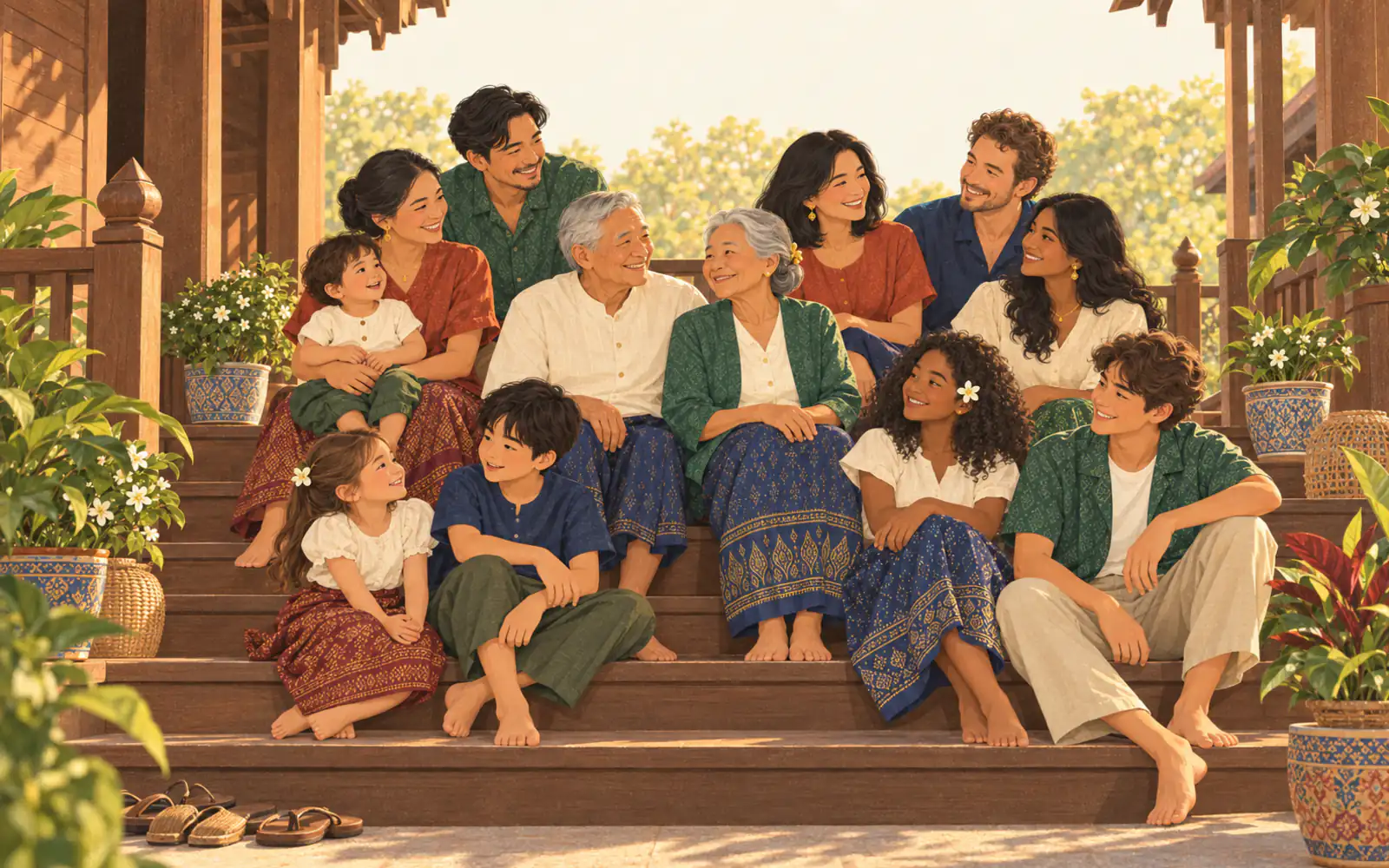
Every Thai family has a few “we just do it this way” rules. Maybe your mum leaves a red drink at the little shrine outside, or your aunt winces when someone calls the new baby gorgeous. None of this is a test you can fail. Here are the beliefs families most often live with, where they come from, and how to respect them, whether you believe them or not.
What is the spirit house outside Thai homes?
That miniature temple on a pillar is a spirit house, san phra phum: a shrine to the protective spirit of the place. Many homes and businesses in Thailand have one, usually in an auspicious corner of the property, and the spot may be chosen with the help of a Brahmin priest.
The idea, as the Wikipedia overview and a 2017 report by The World put it, is hospitality: friendly spirits gather to enjoy the food and drink, and they guard the home against harmful ones. Neglect the offerings, the story goes, and the friendly spirits drift away. Offerings are small and everyday: rice, bananas, coconuts, desserts, water and, very often, red strawberry Fanta. Nobody fully agrees on why red drinks won out. The practice is animist in origin rather than Buddhist, and the two now sit side by side.
As a guest: admire it, don’t touch or move the offerings, and don’t pose in front of it as if it were a prop. If your family wais as they pass, you’re welcome to join in, or just stand quietly.
Why won’t anyone call the baby cute?
Because in the old way of thinking, a beautiful, much-loved baby was exactly what a bad spirit would want to take. Families once gave babies two names to confuse spirits, and plain or unflattering nicknames, like pig or dog, to make them less tempting. The Thailand Foundation notes that the naming practice has faded, but some people still avoid praising a baby’s looks and may say the opposite instead, na klied, “so ugly”, with obvious love.
So if your Thai grandma calls your newborn a little piglet, that’s protection, not an insult. Our guide to Thai nicknames has the whole menagerie, and the first-month ceremony shows how families welcome a baby.
Why is nine lucky in Thailand?
The Thai word for nine sounds like kao, meaning to move forward or progress, and Thai numerology counts it as the luckiest number. You see it everywhere once you notice: weddings often invite nine monks, and the nine auspicious desserts are given together as a wish for progress and fulfilment in everything. Names get the same care: many families choose auspicious, meaningful ones.
If you’re bringing something to a family occasion, our guide to gifts for your Thai family covers what lands well and what some families prefer to avoid.
How do families choose auspicious dates?
For the big days, timing matters. The Thailand Foundation says families almost always consult an astrologer to find an auspicious date and time for the engagement and wedding, and a song marks the lucky moment the ceremony begins. Names can be chosen the same way: some parents pick letters that are astrologically compatible with the day the child was born, and families have long consulted monks and sages when naming. More on the wedding day itself in Thai wedding traditions.
What are the day colours?
Many families also know a colour for each day of the week, each day linked to a planet and its deity from Hindu tradition: Sunday red, Monday yellow (or cream), Tuesday pink, Wednesday green, Thursday orange, Friday light blue, Saturday purple. Because names can be matched to the day of birth too, don’t be surprised if a relative asks which day of the week you were born on, not just the date.
Why do Thai people wear amulets?
Amulets, phra khrueang, are small Buddha images and other sacred objects, worn as lucky charms and for protection, most often around the neck. Yantra designs are carried on cloth (pha yant), rolled up in metal as a takrut, drawn on homes and offices, and, famously, inked onto skin as sak yant. An AFP report found them on motorbike taxis and cars too.
If a relative gives you one, treat it as a blessing. Many families keep amulets above the waist and never leave them somewhere low or on the floor. That’s ordinary care, the same feeling as at the temple.
What about ghosts (phi)?
Spirits and ghosts are called phi, and belief in them is, as one overview puts it, “both popular and enduring”. Many are said to come out at night, and some are believed to stay in certain trees, burial grounds or abandoned houses. Trees said to hold a female tree spirit, Nang Ta-khian, are traditionally wrapped in coloured cloth, and some people bring offerings hoping for luck in the lottery.
The most famous ghost is Mae Nak, a young woman who died in childbirth and came back for her husband. Her shrine in Bangkok’s Phra Khanong area is a real place of devotion: AFP reported people asking her for cures, good luck and exemption from military service, and noted that the temple stays open all night on the eve of a lottery draw. The same report describes zebra statues left at accident spots for the ghosts of crash victims, and businesses inviting monks each year to chase away bad spirits.
For many families, ghost stories are simply how evenings went: told by an uncle, half-scary, half-funny. If you grew up on them abroad, the Thai horror movies guide will feel very familiar.
Head high, feet low: the everyday ones
Some beliefs live in the body. The head is the most sacred part, home to the khwan, a person’s life essence, so touching someone’s head is avoided, even with children. Feet are the lowest, so don’t point them at people or sacred things. The raised threshold of a house or temple is believed to be where the guardian spirit of the building lives, so step over it, not on it. And the car dashboard is said to be the place of the car’s guardian goddess, so treat it with a little care too.
At the temple, and in many homes, the first question to ask is simple:
ต้องถอดรองเท้าไหม
torng thort rorng thao mai
ต้องถอดรองเท้าไหมครับ
torng thort rorng thao mai khrap
ต้องถอดรองเท้าไหมคะ
torng thort rorng thao mai kha
Do I need to take my shoes off?
Literally: “must take-off shoes (question)”
Ask before any building at the wat. The answer is almost always yes.
Draft: waiting for a native speaker’s review.
Customs vary, and what your family does wins
Your family may believe some of these, none of them, or others that aren’t on this page. Region, religion and family history all shape them, and plenty of Thais are relaxed or openly sceptical: the AFP report quotes Thais who are tired of superstition. You don’t have to believe to be respectful, and nobody expects you to know every rule.
What we couldn’t confirm. Families also tell of not cutting hair or nails on Wednesday, not writing a living person’s name in red, not whistling at night, sleeping with your head in a certain direction, six as an unlucky number, pregnancy taboos, and asking monks for a moving-house date. We couldn’t find reliable sources explaining these, so we’ve left them out. If one of them is in your family, ask the person who taught it to you. That conversation is half the point.
Learn the why behind family moments
Reply Thai’s Good to know notes explain the customs around the phrases, and the Big family days lessons get you ready for weddings, merit-making and baby celebrations, so you know why grandma does what she does.
Reply Thai for iPhoneComing soonThai words on this page are a draft until a native speaker has reviewed them.
Questions people ask
What is a Thai spirit house?
A spirit house, san phra phum, is a small shrine for the protective spirit of a place, usually in a corner of the property. Families leave offerings such as rice, bananas, coconuts, desserts, water and red strawberry Fanta, so the spirits stay content and guard the home.
Why is 9 a lucky number in Thailand?
The Thai word for nine sounds like kao, which means to move forward or progress, and Thai numerology counts it as the luckiest number. That's why weddings often invite nine monks and why the nine auspicious desserts are given as a set.
Why don't Thai people say a baby is cute?
An old belief held that praise could draw bad spirits to a precious baby. The Thailand Foundation notes that some people still avoid praising a baby's looks and may jokingly say the opposite. Unflattering nicknames like Moo (pig) come from the same idea.
Why do Thai people wear amulets?
Amulets are small Buddha images and other sacred objects worn as lucky charms and for protection, usually around the neck. Yantra designs are also carried on cloth, rolled into metal takrut, or inked onto skin as sak yant.
Do Thai families use auspicious dates for weddings?
Yes, often. The Thailand Foundation says Thai families almost always consult an astrologer to find an auspicious date and time for the engagement and wedding.
How should I respect my Thai family's beliefs if I don't share them?
Follow the household's lead: don't touch or move offerings at a spirit house, don't step on the raised threshold, don't touch people's heads, and treat amulets with care, as many families keep them above the waist. You don't have to believe in order to be respectful.
Sources
All links read on .
- Thailand Foundation: The captivating stories behind Thai names (14 March 2024)
- Thailand Foundation: Nine auspicious Thai desserts (8 June 2022)
- Thailand Foundation: Thai wedding (25 April 2023)
- Thailand Foundation: 9 quintessential Thai amulets (29 November 2021)
- Thailand Foundation: Yantra, from sacred geometry to sacred tattoos (2 March 2023)
- Thailand Foundation: Feet low, head high, a guide to Thai etiquettes (16 February 2024)
- MGR Online (AFP report): Thailand, land of smiles, land of ghosts (2 February 2015)
- The World (PRX), Patrick Winn: In Thailand, blood sacrifice is out. Strawberry Fanta is in (5 April 2017)
- Wikipedia: Spirit house (background; checked 14 Oct 2026)
- Wikipedia: Ghosts in Thai culture (background; checked 14 Oct 2026)
- Wikipedia: Nang Ta-khian (background; checked 14 Oct 2026)
- Wikipedia: Mae Nak Phra Khanong (background; checked 14 Oct 2026)
- Wikipedia: Thai amulet (background; checked 14 Oct 2026)
- Wikipedia: Thai solar calendar, days of the week (background; checked 14 Oct 2026)
How we write and check our guidesReport a mistake
Letters from the in-between
One email when there’s something worth reading: new guides, stories from other luk khrueng, and a phrase for your next family call. No spam, ever.