Thai ghosts explained: Mae Nak, krasue, phi pop and more
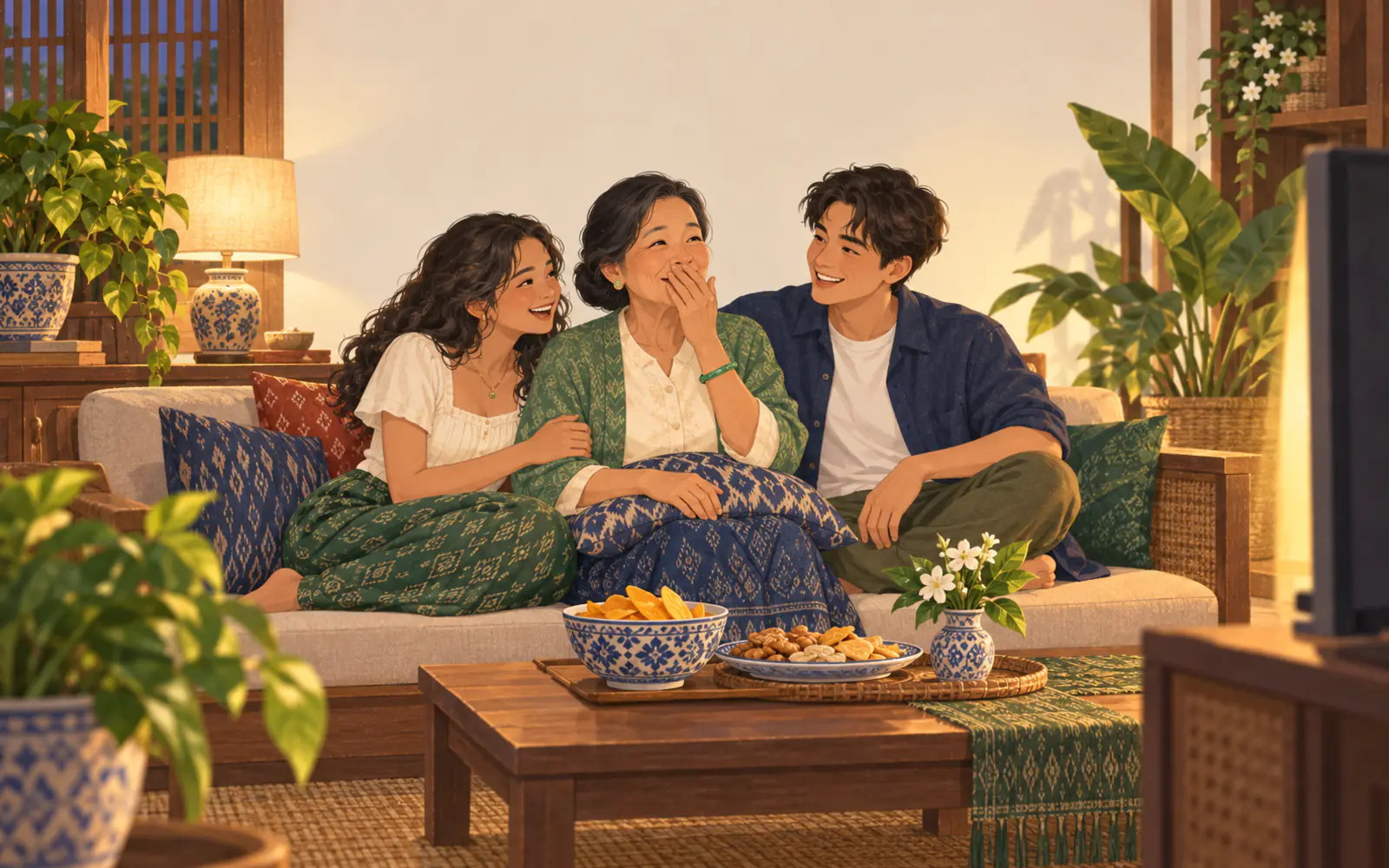
Maybe it was an uncle’s story told late at night on a visit home. Maybe it was Yai telling you not to point at something, or a cousin swearing their neighbour’s house was haunted. Thai ghosts are part of a lot of Thai childhoods, even the ones that mostly happened abroad.
This is a gentle field guide: the ghosts you’ll hear about, what the stories say, and where they turn up in films and TV. We describe beliefs as beliefs. Whether you believe them is up to you (and possibly up to Yai).
What is the Thai word for ghost?
Phi (ผี). It’s the first word of many ghost names, and it also hides in everyday words. The best one: a butterfly is ผีเสื้อ (phii suea), literally “ghost shirt”. Nobody agrees why, which is half the fun. It’s one of our favourite literally-funny Thai words.
Who is Mae Nak?
The most famous ghost in Thailand. In the legend, as Thai Wikipedia tells it, Nak is the wife of Mak. She dies in childbirth and returns as a ghost who keeps her home and waits for him, frightening the villagers until she is finally subdued.
It’s a ghost story, but it’s really a love story, which is why Thai film and TV keep telling it. Thai Wikipedia lists a long run of adaptations, and says three of the films are registered as Thai national film heritage. Two you can start with: Nang Nak (1999), the serious version, and Pee Mak (2013), the comedy. Both are in our Thai horror guide.
Her shrine at Wat Mahabut, off Sukhumvit 77 (On Nut) in Bangkok, still draws visitors. If you go, treat it as you would any temple.
Which Thai ghosts should you know?
Each description below is a short paraphrase of the Thai Wikipedia article on that ghost.
| Ghost | What the stories say |
|---|---|
| Krasue | A ghost that possesses a woman and flies out at night as a floating head with its organs trailing below, looking for raw, bloody food |
| Phi pop | A spirit in folk belief, especially in Isan, that possesses a living person and makes them crave raw food |
| Pret | A hungry ghost from Buddhist belief, suffering endless hunger and pain |
| Phi tai hong | The spirit of someone who died suddenly or violently, said to linger where they died |
| Nang tani | A female spirit who lives in a banana tree and usually appears as a beautiful woman |
| Phi kong koi | A forest spirit, usually described with one leg, that hops and calls “kong koi”, which gives it its name |
| Phi am | What Thai folklore calls sleep paralysis: waking up unable to move or speak, which folk belief blames on a spirit |
| Kuman thong | A child spirit believed to live in a small figurine, cared for like a child, and believed to protect its owner and bring luck |
Doctors call it sleep paralysis. Many families call it phi am. Either way, it’s a rotten night.
What is a spirit house?
That little house on a post outside a Thai home, shop or office is a san phra phum, a spirit house. Thai Wikipedia describes it as a seat for the guardian spirit of the land, set up in an auspicious spot to protect the place and the people who live there. You’ll find them across much of Thailand, and also in Laos and Cambodia.
If your family has one, it’s a lovely thing to ask about: who set it up, what they offer there, and why.
Where do Thai ghosts turn up in pop culture?
Everywhere, and not only in horror.
- Film: Mae Nak (Nang Nak, Pee Mak), the krasue (Krasue: Inhuman Kiss, 2019), and possession stories like The Medium (2021). See our Thai horror guide.
- TV: ghost tales are one of the genres of the evening lakorn.
- Everyday words: the ghost hiding in that butterfly.
Is it rude to joke about Thai ghosts?
It depends on the room. Ghost comedies like Pee Mak are hugely popular. But for many families, spirits, shrines and offerings are part of their faith and daily life. A good rule: laugh at the films, not at anyone’s beliefs, and don’t touch offerings at a shrine or a spirit house. If you’re not sure, follow what your family does.
When someone tells you their neighbour’s house is haunted, here’s an honest reaction that works with friends:
จริงดิ
jing di
No way! / Seriously?!
Literally: “true (go on)”
Said with rising surprise, จริงดิ means “no way!”. Said flat, it means “of course it’s true”. จริงป่ะ (jing pa) is the same surprise as a question.
Draft: waiting for a native speaker’s review.
Practise replying to this in Reply Thai, coming soon to iPhone.
How can ghost stories help your Thai?
Ask an elder for one. Ghost stories are some of the best Thai you’ll ever hear: dramatic, slow, full of pauses and sound effects, and told by someone who loves telling them. You don’t need to catch every word. Ask “and then what?” and let them go.
Reply Thai’s Video call with Yai and Thai with friends your age moments have short, natural replies for exactly these conversations, so you can keep the story going instead of nodding along.
Reply Thai for iPhoneComing soonThai words on this page are a draft until a native speaker has reviewed them. Ghost names are romanized; spellings vary.
Questions people ask
What is the Thai word for ghost?
Phi. It is the word in many ghost names, such as phi pop and phi tai hong, and it also turns up in surprising places: the Thai word for butterfly, phii suea, is literally ghost plus shirt.
Who is Mae Nak?
Mae Nak Phra Khanong is the most famous ghost in Thai folklore: Nak, wife of Mak, dies in childbirth and returns as a ghost who keeps waiting for her husband. A shrine to Mae Nak stands at Wat Mahabut, off Sukhumvit 77 (On Nut) in Bangkok.
What is a krasue?
A krasue is a female ghost from Thai folklore that flies at night as a floating head with its organs trailing below, looking for raw, bloody food. The 2019 film Krasue: Inhuman Kiss turned the legend into a love story.
What is a phi pop?
Phi pop is a spirit in Thai folk belief, especially in Isan, said to possess a living person and make them crave raw food.
What is a spirit house?
A spirit house (san phra phum) is a small shrine built as a seat for the guardian spirit of a piece of land, placed in an auspicious spot to protect the place and the people living there. You see them outside homes, shops and offices across much of Thailand, and also in Laos and Cambodia.
Sources
All links read on .
- Thai Wikipedia: Mae Nak Phra Khanong, article in Thai (page read 14 Oct 2026)
- Thai Wikipedia: krasue, article in Thai (page read 14 Oct 2026)
- Thai Wikipedia: phi pop, article in Thai (page read 14 Oct 2026)
- Thai Wikipedia: pret, hungry ghost, article in Thai (page read 14 Oct 2026)
- Thai Wikipedia: phi tai hong, article in Thai (page read 14 Oct 2026)
- Thai Wikipedia: kuman thong, article in Thai (page read 14 Oct 2026)
- Thai Wikipedia: nang tani, article in Thai (page read 14 Oct 2026)
- Thai Wikipedia: phi kong koi, article in Thai (page read 14 Oct 2026)
- Thai Wikipedia: phi am, article in Thai (page read 14 Oct 2026)
- Thai Wikipedia: spirit house, article in Thai (page read 14 Oct 2026)
- Wikipedia: Nang Nak (1999 film) (page read 14 Oct 2026)
- Wikipedia: Inhuman Kiss (page read 14 Oct 2026)
How we write and check our guidesReport a mistake
Letters from the in-between
One email when there’s something worth reading: new guides, stories from other luk khrueng, and a phrase for your next family call. No spam, ever.